Documents
-
Sale!
 Archives
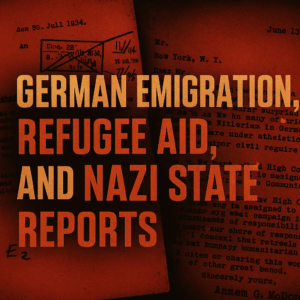
German Emigration, Refugee Aid, and Nazi State Reports (1933-1939) (Irving File 5EA-2)
Add to cartThis file contains official reports, letters, and intelligence documents (1933–1939) detailing German emigration, refugee aid efforts, and Nazi state surveillance of political dissidents, with particular focus on anti-fascist activities, Jewish and Christian refugees, and international humanitarian responses.
-
Sale!Archives
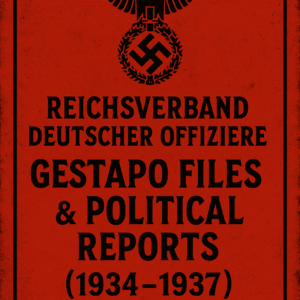
Reichsverband Deutscher Offiziere Gestapo Files & Political Reports (1934–1937) (Irving File 5A)
Add to cartA Gestapo surveillance dossier (1934–1937) on the Reichsverband Deutscher Offiziere, detailing internal reports, political monitoring, and concerns over monarchist and reactionary sentiments among former German military officers.
-
Sale!Archives
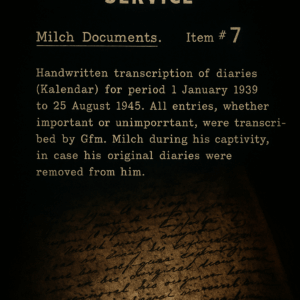
Diaries and papers of Erhard Milch (Irving File 36B) – Negative Reel
Add to cartA firsthand, day-by-day chronicle by Nazi Luftwaffe Field Marshal Erhard Milch from 1939 to 1945, detailing high-level military operations, aircraft production, and internal Nazi command dynamics during World War II.
-
Sale!Archives
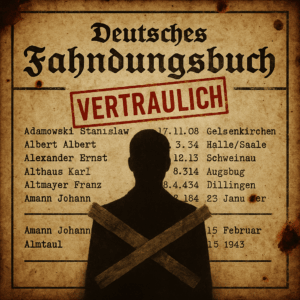
Third Reich Criminal Police Bulletins (Confidential Listings) (Irving File 8E)
Add to cartThis file is a confidential compilation of the Deutsches Fahndungsbuch issued by the Reichskriminalpolizeiamt in Nazi Germany during 1942–1944, listing individuals wanted for criminal, political, or racial reasons across the Third Reich and occupied territories. It served as an internal coordination tool for police and Gestapo operations.
-
Sale!Archives
U.S.B.B.S. interrogations; Galland on Luftwaffe day fighter force (Irving File 3)
Add to cartThe file “DJ03-U.S.B.B.S. interrogations; Galland on Luftwaffe day fighter force” is a declassified microfilm archive containing pre-trial interrogation records and related documents from the U.S. Strategic Bombing Survey (European Theatre), focusing on German Luftwaffe operations during World War II, particularly day fighter forces.
It includes interrogation notes, schedules, logs, and handwritten summaries from individuals such as Adolf Galland, a senior Luftwaffe officer. The document offers firsthand insights into Luftwaffe tactics, operations, personnel, and air defense strategies during the war.